Quantum-secure communication and high-capacity data on a single fiber

Existing fiber networks can now carry both: quantum-secure communication and high-capacity data traffic

Fürth, Germany 2026-07-02

KEEQuant, together with consortium partners CESNET, EXATEL and PCSS, validated the system in a representative modern optical transport network environment, demonstrating quantum-secure communication alongside high-capacity transport traffic over distances of up to 75 km without dedicated dark fiber.
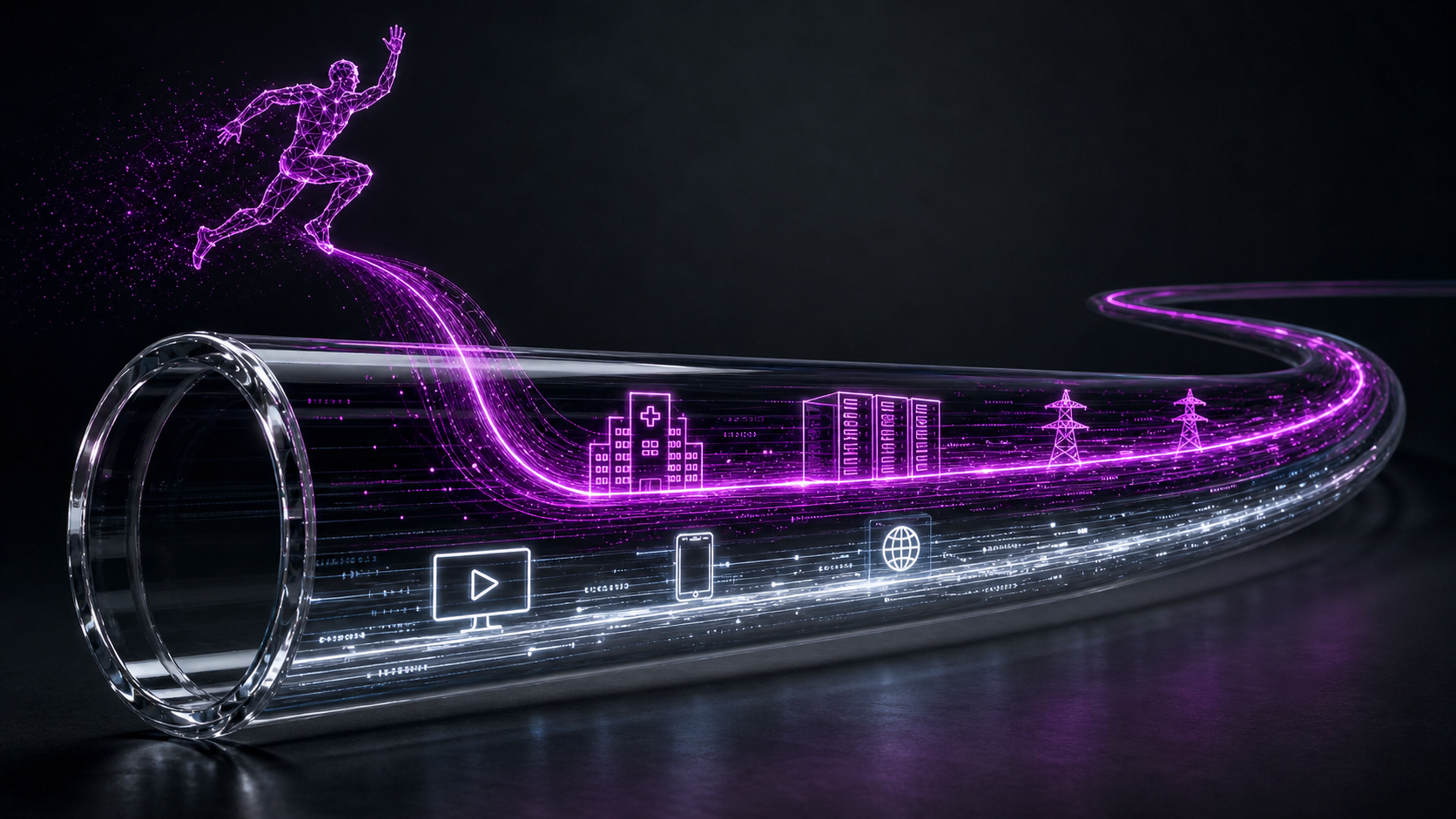
AI-generated Illustration: A visualization of QKD integration into existing transport infrastructure: QKD, shown as a purple quantum stream, joins classical high-capacity data traffic inside the same standard fiber.

AI-generated Illustration: A visualization of QKD integration into existing transport infrastructure: QKD, shown as a purple quantum stream, joins classical high-capacity data traffic inside the same standard fiber.

The SEQRET consortium partners have validated that existing fiber networks can support quantum-secure communication alongside high-capacity data traffic on the same standard fiber pair. The system demonstrated quantum key distribution (QKD) together with up to 64 Tb/s of classical data traffic and reached distances of up to 75 km. The result directly addresses the dark-fiber bottleneck by showing that quantum-secure communication and high-capacity data traffic can coexist on the same fiber infrastructure used in optical transport networks.

This is particularly relevant for operators and infrastructure stakeholders because fiber scarcity is frequently the primary deployment obstacle. Reserving separate fiber for QKD can be costly and operationally difficult, especially in high-capacity transport networks. Coexistence changes that equation by allowing QKD to run on the same optical infrastructure as classical data traffic. This contributes to a reduction in deployment friction and enhances the practical fit of quantum-safe keying within telecom networks. The strategic consequence is clear: QKD can be introduced into installed transport infrastructure without a parallel dark-fiber build out or major network redesign.

“For operators serving critical-infrastructure and public-sector customers, trust depends on evidence. This validation provides exactly that: a concrete basis for evaluating how quantum-secure key distribution can be integrated into reliable, security-sensitive network services,” says Mateusz Ozimek, who leads the SEQRET project at EXATEL and works there as Head of the Space Technologies Team.

The validation was performed in a two-node setup over standard G.652.D fiber. To reflect representative network conditions, six optical transceivers were employed, while the rest of the optical transport environment was filled with noise loaded channels to emulate a fully populated DWDM line. In parallel, a KEEQuant QKD module generated cryptographic keys, which were delivered through the KEEQuant Key Management System (KMS) to an encryptor. A live encrypted video stream was transmitted using end-to-end encryption, showing a system-level implementation rather than an isolated component result.

Stable coexistence was demonstrated across three operating points:

  • 80 × 800 Gb/s (64 Tb/s) across the C- and L-band over 60 km
  • 40 × 800 Gb/s (32 Tb/s) in the C-band over 65 km
  • 80 × 400 Gb/s (32 Tb/s) across the C- and L-band over 75 km

The result points to a practical route for integrating QKD into existing optical transport infrastructure with lower deployment friction and without reducing available payload capacity.

The demonstration brought together the complementary expertise of several project partners. KEEQuant (Germany) provided the QKD and key management systems and led the overall integration concept and end-to-end demonstration. EXATEL (Poland) contributed the telecommunications operator perspective, defining the operational requirements for real-world network deployment. CESNET (Czech Republic) provided an advanced testbed environment and supported the validation process, while PCSS (Poland) supplied the optical fibers used for range testing.

Funding

This work was carried out with the SEQRET project. The project is funded under the Digital Europe Programme within the framework of EuroQCI under the DIGITAL-2021-GCI-01-INDUSTRIAL call with the project ID 101091591.

Acknowledgements

KEEQuant thanks Ribbon for providing the encryption cards.

Consortium and Press Contacts

KEEQuant GmbH, develops deployable quantum-security technologies including quantum key distribution, key management and secure networking solutions for confidentiality-sensitive infrastructures (Germany)

E-Mail: press@keequant.com

CESNET, Czech Education and Scientific Network (Czech Republic)

E-Mail: marketing@cesnet.cz

EXATEL, leading provider of telecommunications, ICT, and cybersecurity technologies (Poland)

E-Mail: biuroprasowe@exatel.pl

PCSS, Poznan Supercomputing and Networking Center (Poland)

E-Mail: pr@man.poznan.pl
2026-07-03T10:09:09+00:00July 2nd, 2026|

Quantum-Sovereign AI for Organizations

Quantum-Sovereign AI – from critical risk to trusted solution

KEEQuant, Collaider and noris network demonstrate a sovereign AI model that combines quantum-secured communication, trusted German infrastructure and application-ready AI for confidentiality-sensitive use cases.

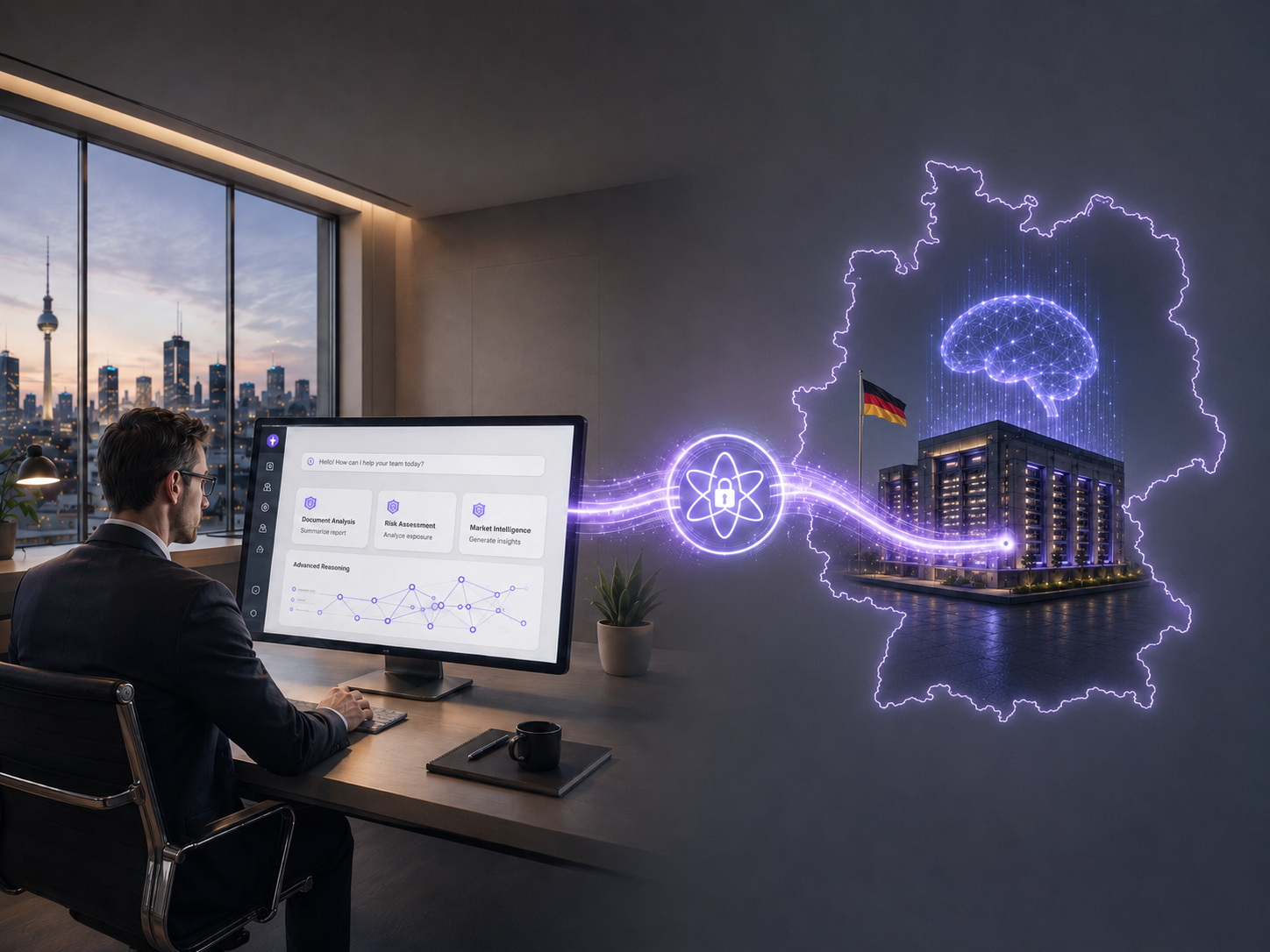
Illustrative view of a sovereign AI architecture in which users access advanced AI services through trusted German infrastructure and quantum-secured connectivity.

Illustrative view of a sovereign AI architecture in which users access advanced AI services through trusted German infrastructure and quantum-secured connectivity.

Fürth / Nuremberg, Germany — 2026-06-18 — Many organizations want to use AI for real work, but stop short when sensitive information has to leave their environment under a conventional cloud model. Questions around confidentiality, governance and long-term exposure often make ChatGPT-like tools difficult to justify for security-sensitive workflows.

KEEQuant, Collaider and noris network have now demonstrated a different approach: a sovereign AI architecture that combines trusted German infrastructure, specialized AI applications and quantum-secured communication. The demonstrator shows how advanced AI can become more usable for organizations that previously could not risk it in sensitive contexts. This is especially relevant for public-sector organizations, critical infrastructure operators, healthcare providers, financial institutions, professional-secrecy environments and enterprises working with confidential data or valuable intellectual property.

Many of these organizations do not want to operate advanced AI fully on site, yet also cannot rely on a standard public-cloud trust model for sensitive work. The joint demonstrator addresses that gap by bringing AI closer to the user in a more controlled operating model. Instead of forcing a choice between no AI at all and a deployment model they are reluctant to use, it provides a stronger basis for practical AI adoption in environments where trust, accountability, and infrastructure locality matter.

“For many organizations, AI has not been blocked by lack of interest, but by lack of a model they can responsibly use for sensitive work,” said Imran Khan, Managing Director at KEEQuant. “This demonstrator shows that advanced AI can be delivered nearby, in trusted infrastructure, with quantum-secured communication as a real enabler.”

KEEQuant contributed the quantum-secured communication and key-management layer at the foundation of the demonstrator. In the implemented setup, via quantum key distribution generated keys were fed into KEEQuant’s key-management system and used to provision the protected access path between a browser-based client and the server-side large language model (LLM). This translates quantum-safe communication from an abstract infrastructure promise into a concrete AI access architecture.

Collaider contributed the application-layer perspective, showing how this architecture can support specialized AI use cases rather than a generic chatbot scenario alone. That matters because sensitive organizations rarely adopt AI as a stand-alone novelty. They adopt it when it can be embedded into real workflows, guarded contexts and domain-specific applications.

“At the application layer, the question is not simply whether AI works, but whether it can be used in a way that respects how organizations actually handle sensitive processes and information,” said Michael Klieber, Managing Director & Co-Founder at Collaider. “This demonstrator shows how advanced AI can be brought into that reality more credibly.”

noris network contributed the infrastructure and operating-environment perspective required to move such a model beyond a purely technical exercise. As an IT service provider for organizations with demanding requirements in security and availability — including sectors such as banking, insurance, public administration, critical infrastructure and healthcare — noris brings the operational credibility needed to host advanced AI workloads in a controlled environment. Certifications and frameworks such as ISO 27001, BSI Grundschutz, BSI C5 and EN 50600 further underline that positioning. At the same time, noris is expanding AI-ready infrastructure in Germany, strengthening the practical outlook for sovereign AI services that combine modern compute capacity with strong security and availability requirements.

“This project builds on a much longer shared history,” said Joachim Astel, Founder and CRO at noris network. “We already worked together in earlier quantum-cryptography initiatives, including the HQS project, and it is exciting to see that foundation now evolve into a practical AI architecture. Organizations in security-sensitive sectors need more than access to a model. They need an operating environment they can trust.”

The partners see the demonstrator as a basis for future sovereign AI offerings aimed at organizations that need modern AI capability without giving up control over where workloads run and how sensitive access paths are secured. The work does not replace governance or compliance processes on its own, but it addresses one of the central blockers that has kept many organizations from using generative AI more broadly: the absence of a credible security and infrastructure model for sensitive use cases.


Consortium and Contacts 

KEEQuant GmbH

KEEQuant develops deployable quantum-security technologies including quantum key distribution, key management and secure networking solutions for confidentiality-sensitive infrastructures.

Press contact:

KEEQuant GmbH
Imran Khan

GS28 – 6th Floor
Gebhardtstr. 28
90762 Fürth
Germany
E-Mail: press@keequant.com

Collaider

Collaider develops secure AI applications and workflow-oriented AI environments for organizations that need practical and privacy-aware AI adoption.

Press contact:

Florian Klaus, project management
E-Mail: florian.klaus@collaider.com

noris network AG

Nuremberg-based noris network AG offers companies and organizations in the finance, public sector, and enterprise sectors customized IT solutions in the areas of IT outsourcing, managed services, cloud services, and network and security.

In addition to standard products and services for traditional, virtualized IT infrastructures, noris network offers managed PaaS environments for container solutions on its own cloud platforms. The technological foundation is a high-performance IT infrastructure featuring noris network’s own high-security data centers—including Nuremberg South and Munich East, two of the most recognized as the most modern, secure, and energy-efficient data centers in Europe.

noris network AG is certified for consistent quality and security in its service and information security management across all business operations in accordance with ISO 20000-1, ISO/IEC 27001, and ISO 9001. In the area of “Security Management for Buildings,” noris network is the first data center operator to be certified according to VdS Guideline 3406. In addition, the Munich East data center has been certified to meet the highest availability, protection, and energy efficiency classes as defined by EN 50600. The Nuremberg Central, Nuremberg South, and Munich East data centers have received ISO 27001 certification based on the BSI’s IT-Grundschutz standard. At the Nuremberg South location, noris network offers the unique opportunity to use a colocation data center that meets the highest security standards: EN 50600, TSI.STANDARD V4.6 Level 4, and ISO/IEC 22237. Other certifications held by the IT service provider include PCI DSS, TISAX, and ISO 14001 Environmental Management.

noris network AG was founded in 1993 and is now one of Germany’s pioneers in the field of modern IT services. It serves renowned companies such as adidas AG, Bayerncard, Consorsbank, Finanz Informatik Technologie Service, the Max Bögl Group, Flughafen Nürnberg GmbH, Nürnberger Versicherung, paydirekt, RCI Banque, Senacor Technologies AG, TeamBank AG, and many more.

Press contact:

HighTech communications GmbH
Brigitte Basilio

Brunhamstraße 21
81249 München
Tel.: +49 89 500778-20
E-Mail: b.basilio@htcm.de
Homepage: www.htcm.de

2026-06-22T05:10:55+00:00June 18th, 2026|

QuINSiDa Demonstrates Optical Wireless Quantum Security

Optical wireless quantum secure communication: free-space QKD and Li-Fi in one system

Fürth, Germany 2026-05-26

The German consortium QuINSiDa has achieved a major step towards mobile quantum-secure communication. They demonstrated a one-of-a-kind free-space data transfer channel supporting, for the first time, LiFi and major quantum key distribution (QKD) implementations. Additionally, the system integrates key management (KMS), encryption, and monitoring, illustrating technological readiness. This architecture enables quantum-secure key delivery without relying on fiber or radio, opening new possibilities for high-security networks where flexible infrastructure is desirable.

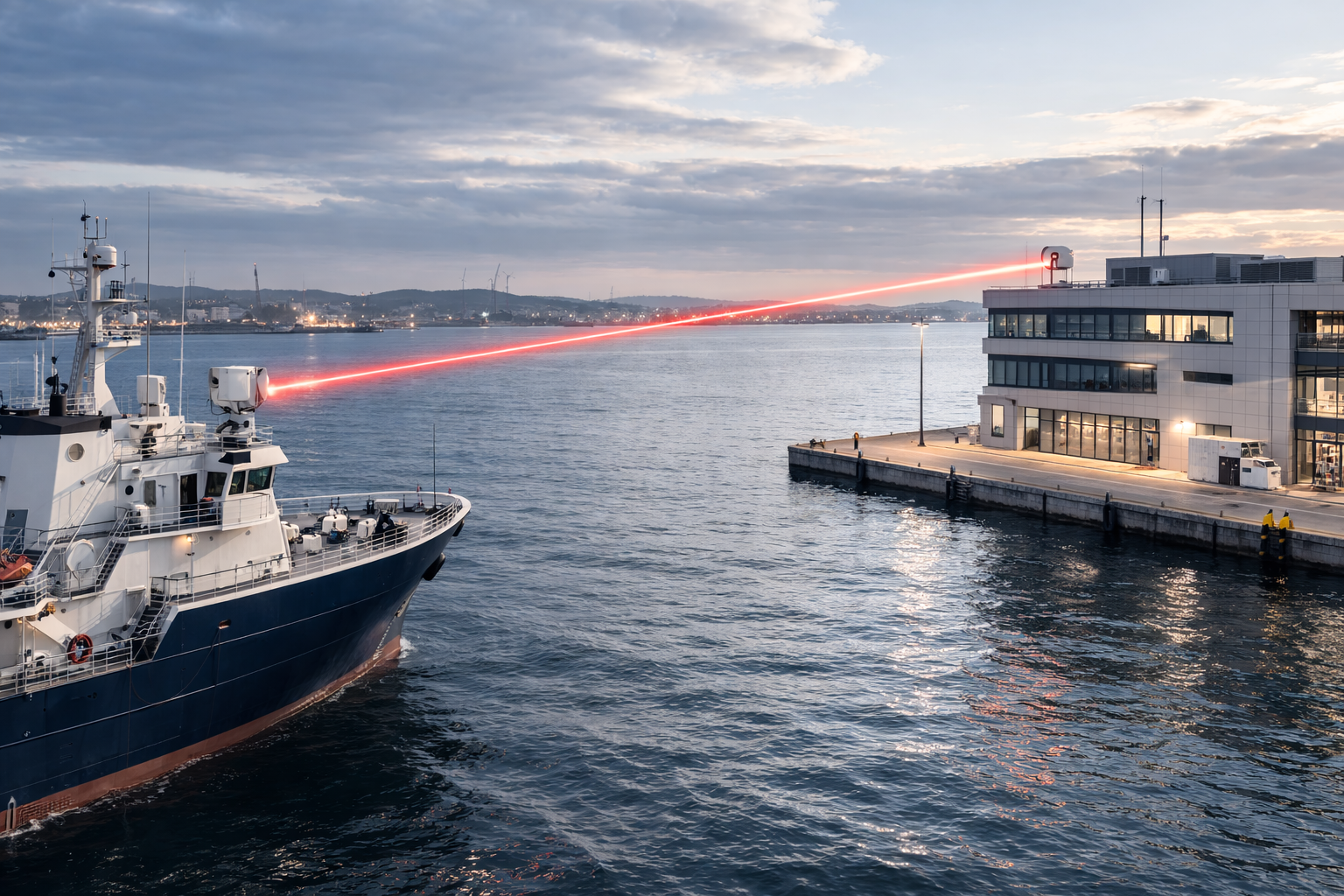
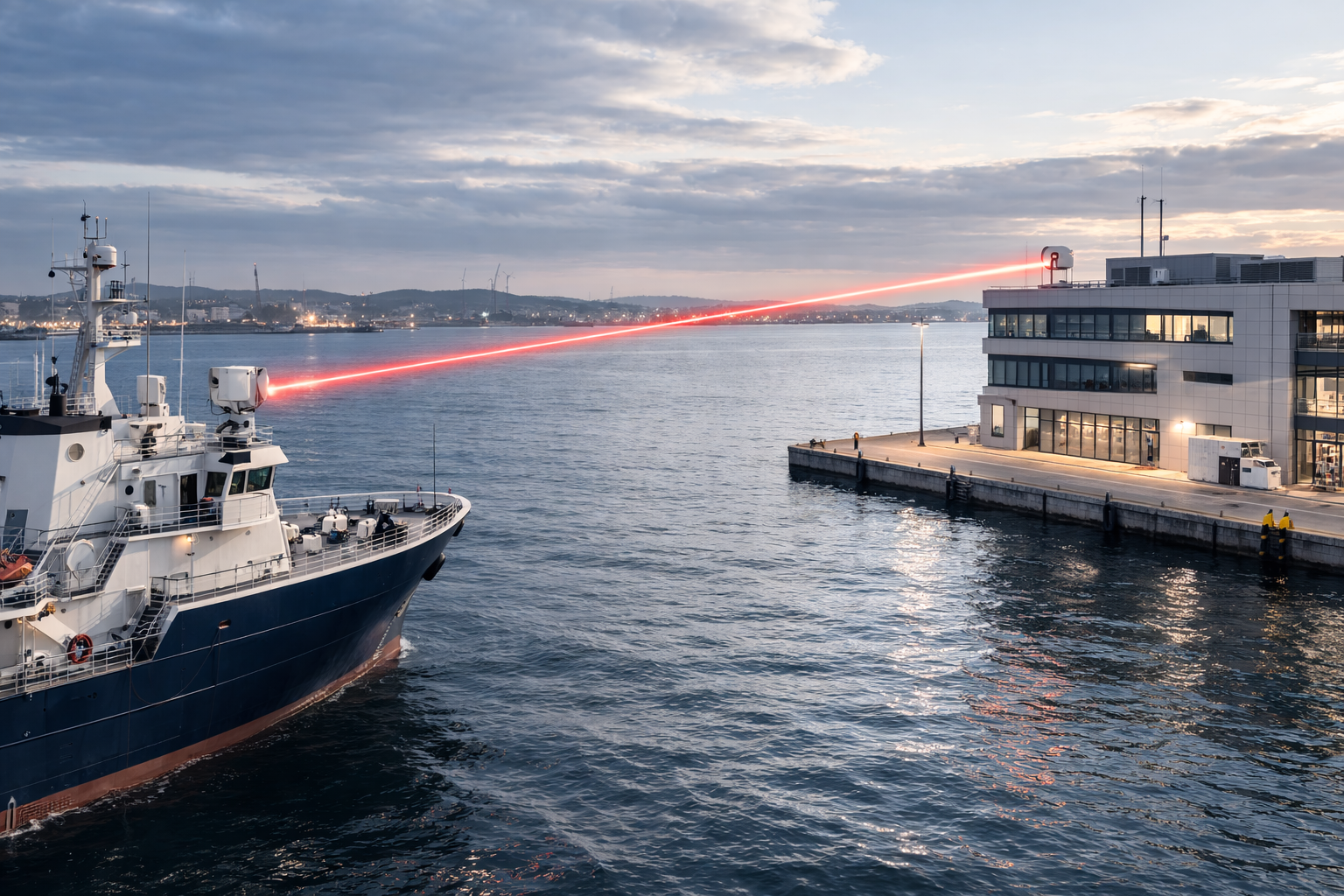
Illustration of the QuINSiDa vision: quantum-secure optical wireless links between fixed infrastructure and mobile platforms (e.g., vehicles, vessels, drones, etc.) – using free-space QKD and Li-Fi integrated with key management, encryption and network monitoring.

Illustration of the QuINSiDa vision: quantum-secure optical wireless links between fixed infrastructure and mobile platforms (e.g., vehicles, vessels, drones, etc.) – using free-space QKD and Li-Fi integrated with key management, encryption and network monitoring.

So far, most quantum communication systems depended on dedicated fiber networks, limiting their flexibility. QuINSiDa has now demonstrated an integrated optical-wireless quantum security stack in the laboratory, combining free-space Continuous- and Discrete-Variable QKD (CV/DV-QKD) with Li-Fi and connecting the result to key management, encryption and monitoring. The setup operates over a line-of-sight optical link, enabling quantum-secure key distribution for civil critical infrastructure applications, including maritime and harbor connectivity, industrial campuses, aviation, automotive environments, temporary secure networks and fixed-to-mobile links. The design allows to conveniently deploy and monitor the system while remaining compatible with existing security workflows.

With this achievement, Germany steps closer to a future where quantum-secure communication is moving towards mobile security applications, that can be deployed wherever optical wireless links are feasible. This brings quantum-secure encryption into real-world operations and offers a powerful tool for securing critical infrastructure.

Technical highlights

The breakthrough lies in a combination of Li-Fi and QKD that enables line-of-sight communication. In this approach, Li-Fi and QKD are integrated into the same wireless environment:

  • Continuous-Variable QKD at 1550 nm
  • Discrete-Variable QKD at 810 nm
  • Li-Fi in the 850–940 nm range.

Wavelength separation and optical filtering allow all three to operate simultaneously without disturbing each other. In the integrated system, the QKD post-processing data is transmitted over the Li-Fi link rather than in a dedicated channel. The Li-Fi connection thus  forms the only channel for classical communication, which is an advantageous simplification.

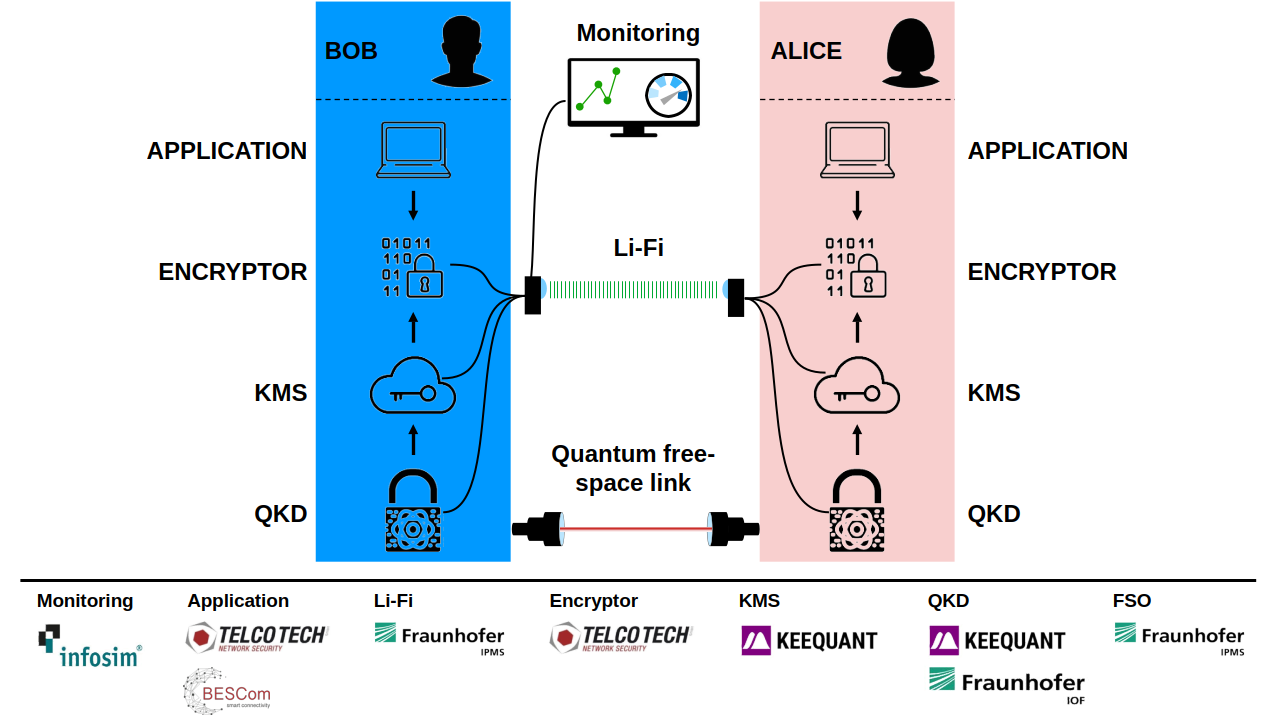
Schematic of the technological stack: at the bottom the QKD system generates quantum-secure key material using both the quantum free-space link (PAT) and the Li-Fi channel. The keys are retrieved and managed by the KMS. The encryptor takes the payload from the user application — say at Bob — and encrypts it with a key from the KMS. The encrypted data is sent to the second party — Alice — over Li-Fi. Alice’s encryptor deciphers the data with the symmetric key retrieved from their synchronized KMS.

Schematic of the technological stack: at the bottom the QKD system generates quantum-secure key material using both the quantum free-space link (PAT) and the Li-Fi channel. The keys are retrieved and managed by the KMS. The encryptor takes the payload from the user application — say at Bob — and encrypts it with a key from the KMS. The encrypted data is sent to the second party — Alice — over Li-Fi. Alice’s encryptor deciphers the data with the symmetric key retrieved from their synchronized KMS.

Maintaining a stable free-space optical link requires precise alignment, which the QuINSiDa system achieves by using a Pointing/Acquisition/Tracking (PAT) subsystem . Li-Fi supports endpoint identification/localization and provides a feedback channel, enabling PAT to acquire and maintain alignment for the quantum link. The project implemented a coupling/interface concept that can serve both CV-QKD and DV-QKD while preserving the signal properties relevant to QKD. PAT control and telemetry are fully integrated into the overall communications flow.

The QuINSiDa setup focuses on practical operational readiness and integrates key management, encryption, and monitoring. At the same time, network management workflows and telemetry (e.g., via a gNMI-based approach) are adapted to QKD, Li-Fi, and PAT components.  The result is an end-to-end system designed not only as a laboratory demonstration, but as a deployable, monitorable, and maintainable solution ready for operational security environments.

Consortium

QuINSiDa was carried out by a consortium of six partners: KEEQuant GmbH (coordination; CV-QKD, key management integration), Fraunhofer Institute for Photonic Microsystems IPMS (Li-Fi and free-space link components; PAT), Fraunhofer Institute for Applied Optics and Precision Engineering IOF (DV-QKD contribution), Infosim GmbH & Co. KG (monitoring/network management system integration), TELCO TECH GmbH (encryption integration), and BESCom Elektronik GmbH (use-case, transfer and dissemination).

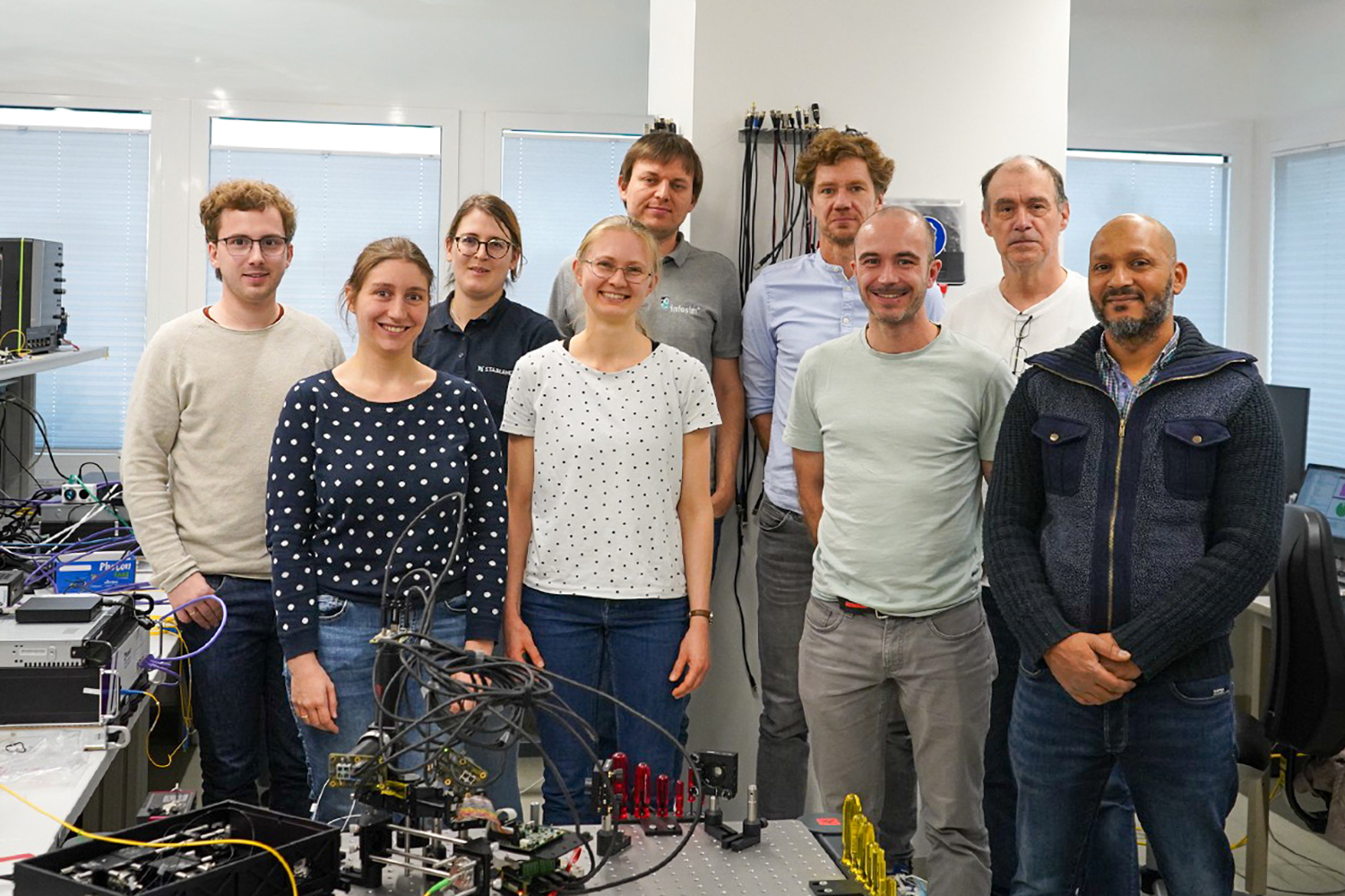
QuINSiDa partners at the final lab demonstration of the integrated optical-wireless security stack.

Press contacts

Funding acknowledgment

QuINSiDa was funded by the German Federal Ministry of Research, Technology and Space (BMFTR) under project numbers 16KISQ082K, 16KISQ083-6, within the funding measure “Lokale Netze zur Quantenkommunikation (Q-LAN)”.


2026-05-26T14:03:11+00:00May 26th, 2026|

First steps towards fully wireless quantum-safe communication

Fürth, 26.06.2025

An interdisciplinary team of researchers and companies in Germany has demonstrated the integration of quantum key distribution (QKD) with Li-Fi technology for the first time. The demonstration was carried out as part of the BMBF-funded project “QuINSiDa” and showcased at the PMRExpo exhibition in Köln, Germany.

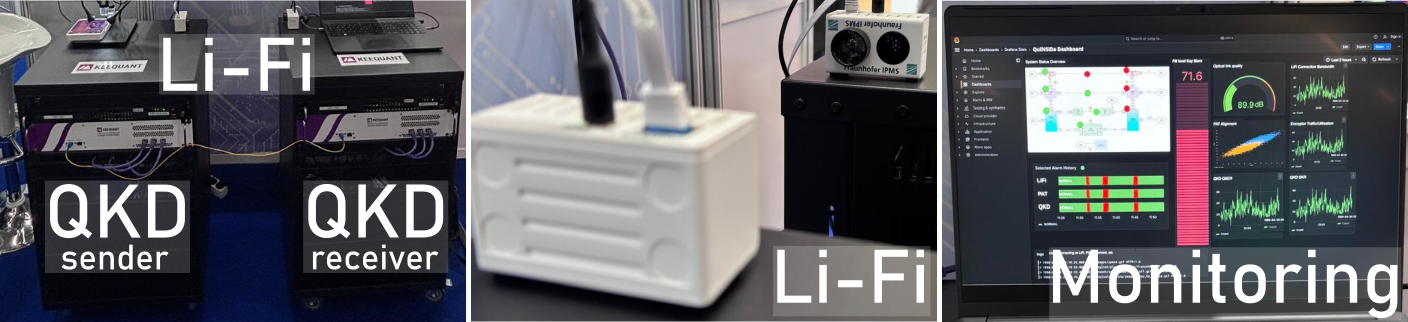
Figure 1: (Left) Two QKD nodes, connected by Li-Fi to transmit the classical QKD channel and optical fiber for the quantum QKD channel. (Middle) Closeup of the Li-Fi link connecting the two QKD nodes. (Right) Monitoring and control dashboard.

While QKD produces ultra-secure keys used for encrypting data, it relies on an optical line of sight connection to work – the very principle underlying Li‑Fi – making them a natural match. This fusion unlocks innovative applications that combine ultra‑high data security with the speed and efficiency of LED‑based Li‑Fi. Key applications include local quantum networks (Q‑LANs) for campuses, as well as fixed‑to‑mobile connections for airports, planes, shipyards, ships, and critical infrastructure.

Technological details

Developed by consortium partners, the key technologies include:

  • Li-Fi (Light Fidelity): is a wireless communication technology that utilizes light to transmit data, providing high-speed data transfer, enhanced security, and minimized interference. It is specifically designed for environments where radio frequency communication is restricted or where secure data exchange is essential. The Fraunhofer IPMS Institute in Dresden is designing these systems and provided both sender and receiver within the project.
  • QKD and KMS: KEEQuant GmbH in Fürth is developing a continuous‑variable quantum key distribution (CV‑QKD) system. Built on standard coherent communication fiber optics, it leverages Heisenberg’s uncertainty principle for quantum security, operates at room temperature, and fits in a standard 19″ rack. An accompanying Key Management System supplies encryption keys to applications. The project focuses on seamless system integration and protocols tailored for campus networks.
  • Networking Monitoring: Monitoring systems combined with meaningful dashboards are crucial for many reasons. In addition to visualizing a general overview, it is also helpful to get deep insights into the status of individual devices or the overall health of the network. QKD applications and devices are not yet widely available, especially in a fibreless version. As part of the QuINSiDa project, we have been working on the interfaces to the QKD and KMS systems as well as to the Li-Fi and PAT systems. For the QKD connection, we have built on the ETSI QKD standards. The PMR-Expo dashboard provided by Infosim® shows a logical representation of the demo with status indicators of each device. In addition, the relevant metrics, such as key rate and error rate, were visualized as time series.

Integrating these technologies enabled a two‑node demonstration in which the classical communication channel between CV‑QKD devices—typically connected by cable—was replaced by a wireless Li‑Fi link.

BESCom GmbH, investigating these use cases, predicts that mobile high‑security data communication will play a crucial role in the future of both mobile and optical networks.

The optical fiber linking the quantum components of the two QKD systems will later be replaced by a telescope developed by Fraunhofer IPMS, enabling a fully wireless system. Moreover, project partners plan to integrate an encrypted link (Telco Tech GmbH) and an entanglement‑based QKD system (Fraunhofer IOF, Jena), laying a robust foundation for future experiments and products targeting high‑security campus networks and fixed‑to‑mobile scenarios. Stay tuned for further updates as the project advances.

Funding acknowledgement

This project was funded by the Federal Ministry of Education and Research (BMBF) under project number 16KISQ082K.

Partner details

Fraunhofer IPMS is a leading international research and development service provider for electronic and photonic microsystems in the application fields of Smart Industrial Solutions, Bio and Health, Mobility as well as Green and Sustainable Microelectronics. Research focuses on customer-specific miniaturized sensors and actuators, MEMS systems, microdisplays and integrated circuits as well as wireless and wired data communication. The institute develops systems and components on 200 and 300 mm wafers in their state-of-the-art clean rooms. Services range from consulting and design to process development and pilot series production. Contact: Stephan Kube: stephan.kube@ipms.fraunhofer.de

Infosim® is a leading provider of automated Service Fulfillment and Service Assurance solutions for Telcos, ISPs, Managed Service Providers, and Corporations. Since 2003, Infosim® has been developing and improving upon StableNet®, one of the leading automated network and services management platform with a 4-in-1 solution that combines Discovery & Inventory, Configuration, Fault, and Performance Management.” Contact: Dr. Stefan Kremling: kremling@infosim.net

Founded in 2020, KEEQuant GmbH is a startup company specializing in quantum-safe communication. With the mission of securing today’s communication and network infrastructure, KEEQuant develops and supplies Quantum Key Distribution (QKD) and Key Management Systems (KMS), featuring a hybrid integration of Post-Quantum Cryptography (PQC) to enable future-proof solutions. By employing proven secure methods, KEEQuant ensures that security-critical data streams remain protected against future attacks by quantum computers. As a company fully based and financed within the EU27, KEEQuant is committed to delivering trustworthy solutions even for the most demanding and critical applications. Contact: press@keequant.com


2025-06-26T13:07:16+00:00June 26th, 2025|

QCI Days Athens

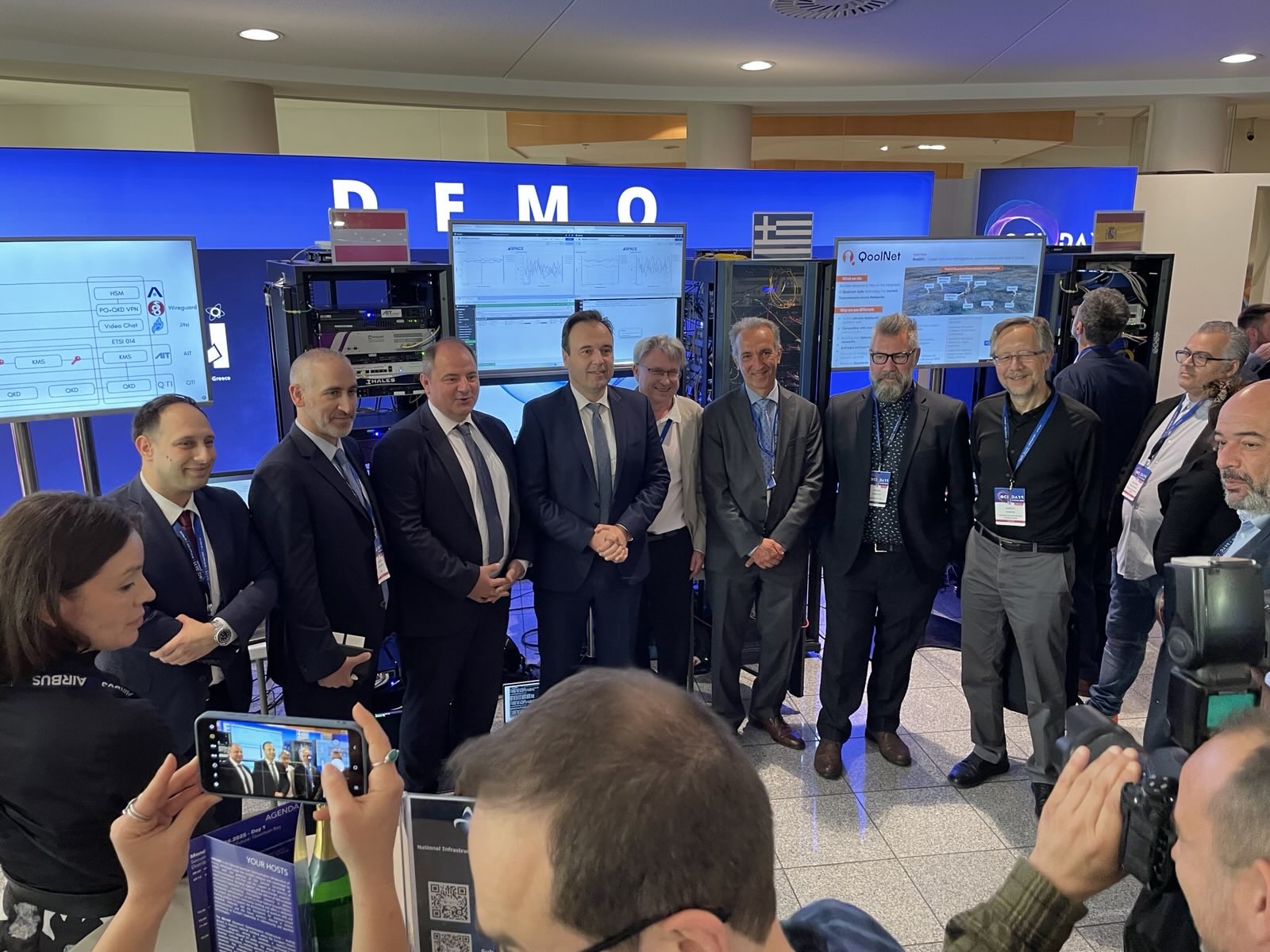
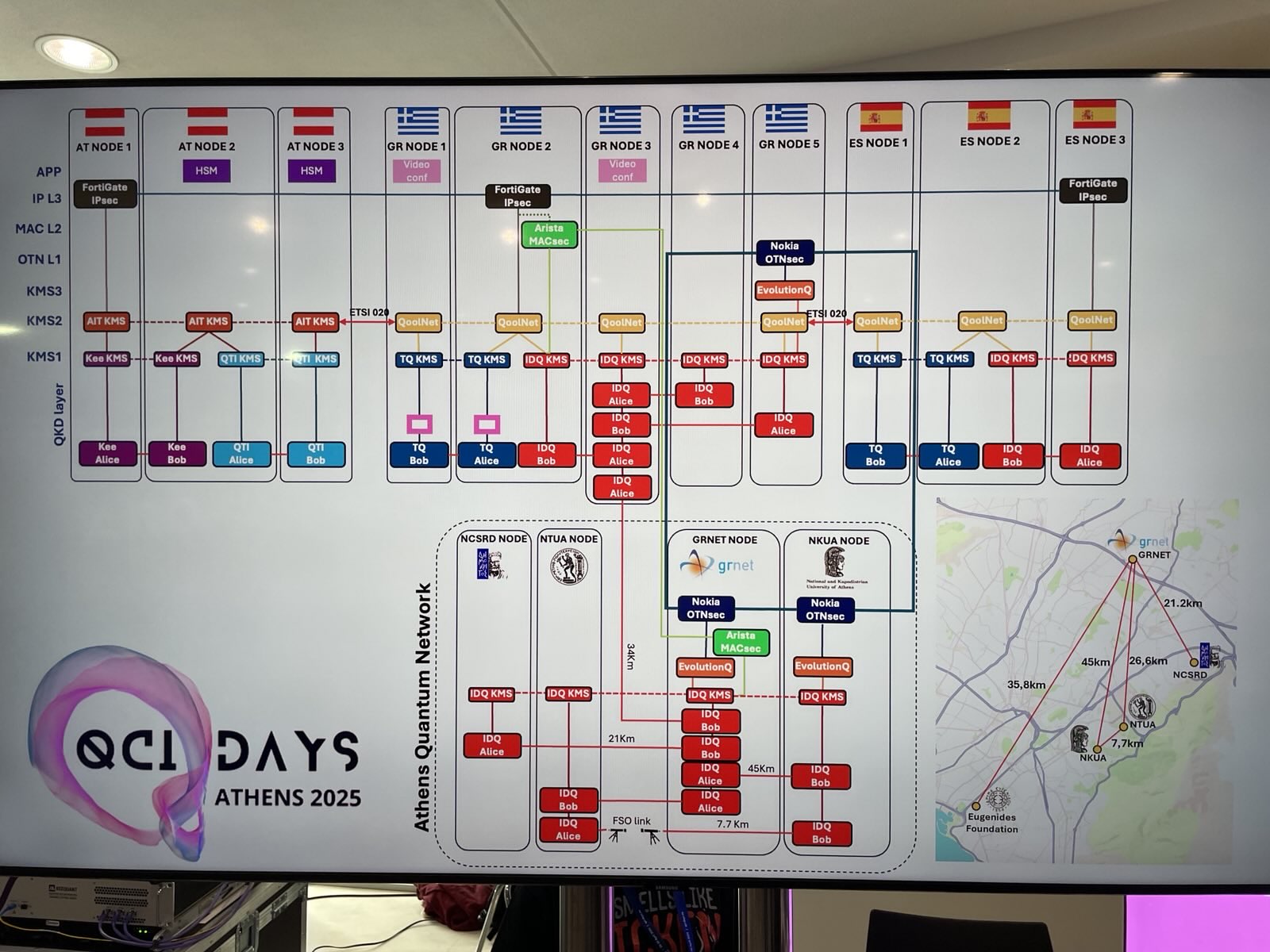
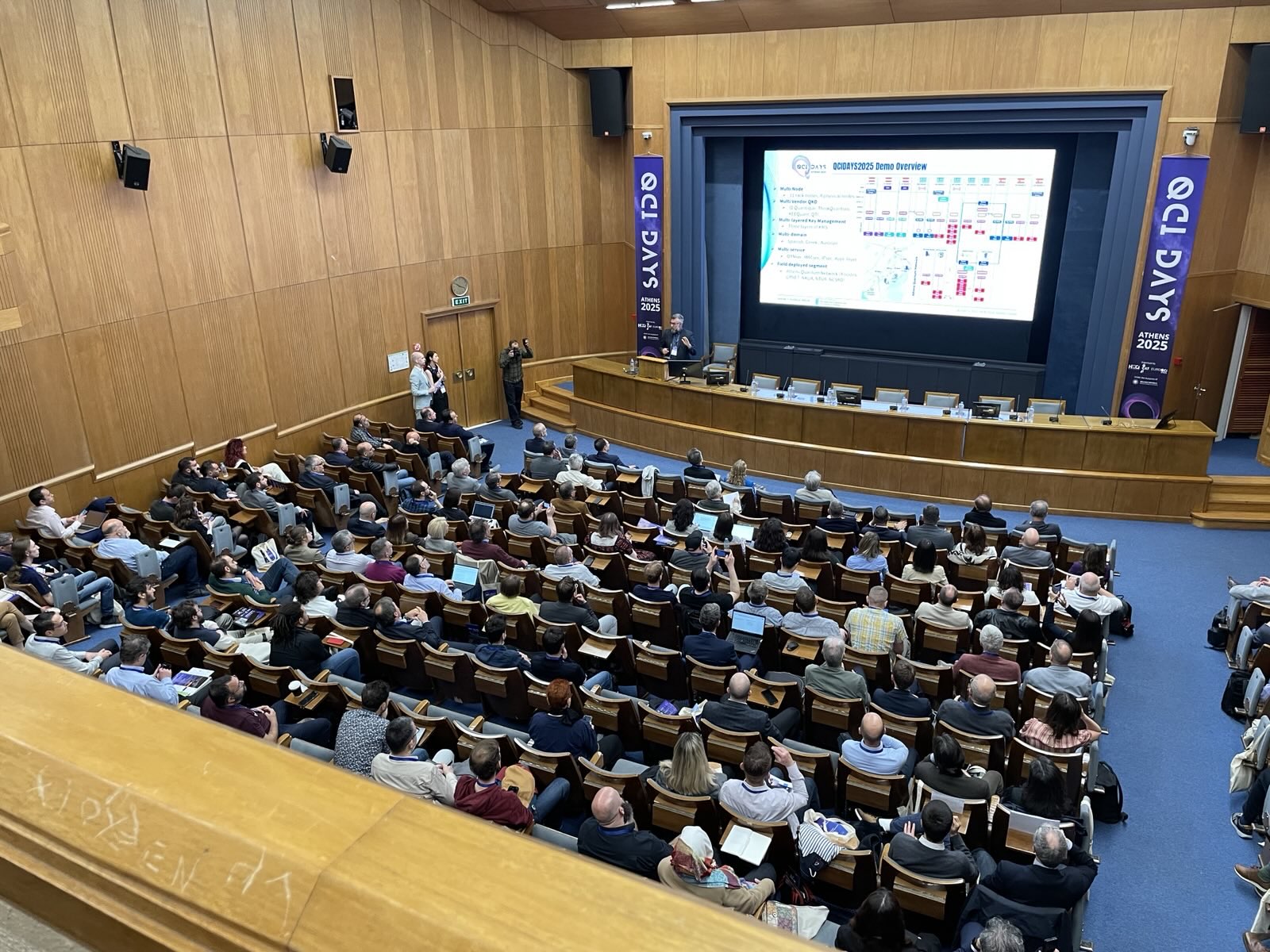
🔐🌍 At the recent QCI Days in Athens, KEEQuant proudly demonstrated its Quantum Key Distribution (QKD) and Key Management System (KMS) as part of the Austrian QCI-CAT domain — with a live quantum-secure link extended directly to our booth! A real-world showcase of what’s possible when research meets robust engineering.

This successful setup was made possible thanks to great collaboration with:

🇬🇷 HellasQCI
🇪🇸 MADQuantum
🇦🇹 AIT/QCI-CAT

A big thank you to all our partners and the event organizers for making this milestone possible. These cross-border demonstrations clearly show the interoperability and readiness of quantum communication across Europe. 🤝✨

With this, KEEQuant’s QKD and KMS products are fully ready to meet the needs of the upcoming Connecting Europe Facility (CEF) projects, helping secure the continent’s digital infrastructure for decades to come.

2025-05-16T08:09:05+00:00May 16th, 2025|

DemoQuanDT preprint available

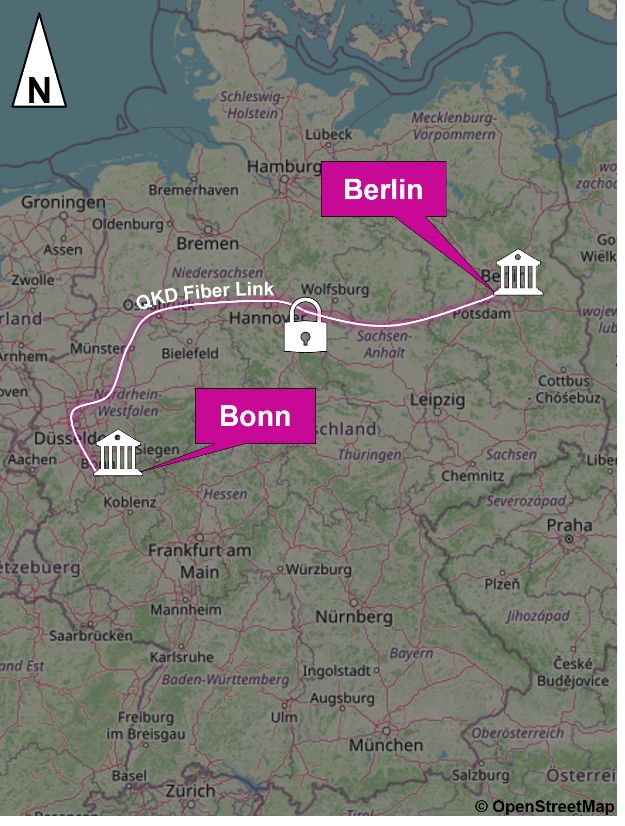
The DemoQuanDT consortium is thrilled to announce a new preprint on the deployment of a carrier-grade quantum key distribution (QKD) network. This work highlights a groundbreaking achievement: the creation of a quantum-secured link spanning 923 km between the German cities Berlin and Bonn. The project demonstrated not only the technical feasibility of integrating QKD into existing network infrastructures, but also the scalability and practical implementation of QKD in a real-world carrier environment.

This milestone would not have been possible without the dedicated contributions of the partners: Deutsche Telekom, Adva Network Security GmbH, Hochschule Darmstadt, KEEQuant, Rohde & Schwarz Cybersecurity and Technische Universität Darmstadt.

You can find the full preprint here: https://arxiv.org/pdf/2503.21186 , and more information on the project site: https://www.forschung-it-sicherheit-kommunikationssysteme.de/projekte/demoquandt

2025-05-16T07:53:05+00:00March 28th, 2025|

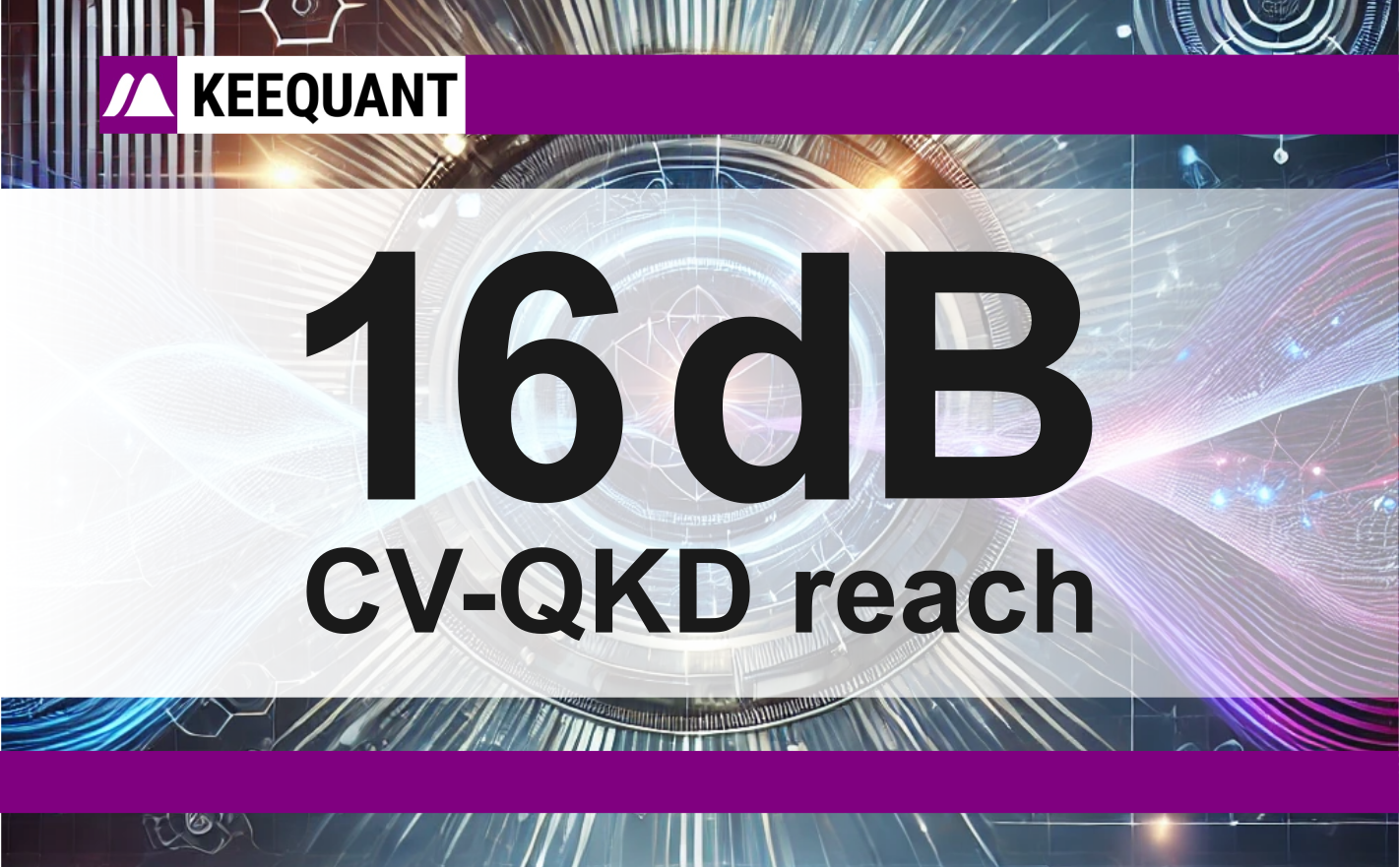
16 dB reach specification with CV-QKD in the Andariel Testbed Series

We are excited to announce a major technology milestone: KEEQuant’s Andariel Testbed Series CV-QKD systems now support 16 dB channel loss!

Why is this big news? Because 16 dB reach (80 km in standard telecom fiber) means that continuous-variable QKD is no longer limited to short links—it’s now viable not just for metro and regional, but also for long-haul, core, and data center interconnect networks, broadening its real-world application space. 🚀 This breakthrough brings us a step closer to real-world deployment at scale, making CV-QKD the scalable option for securing critical infrastructure.

Security matters: Our security proofs are well-founded and sound.
➡️ What’s next? Even more reach, full certification, and further miniaturization using photonic integrated circuits (PICs).
📄 Get the full details – Download the datasheet here.

The future of quantum-secure communication is here—and we are just getting started. 💡


2025-02-14T10:00:45+00:00February 14th, 2025|

Frankfurt Digital Finance

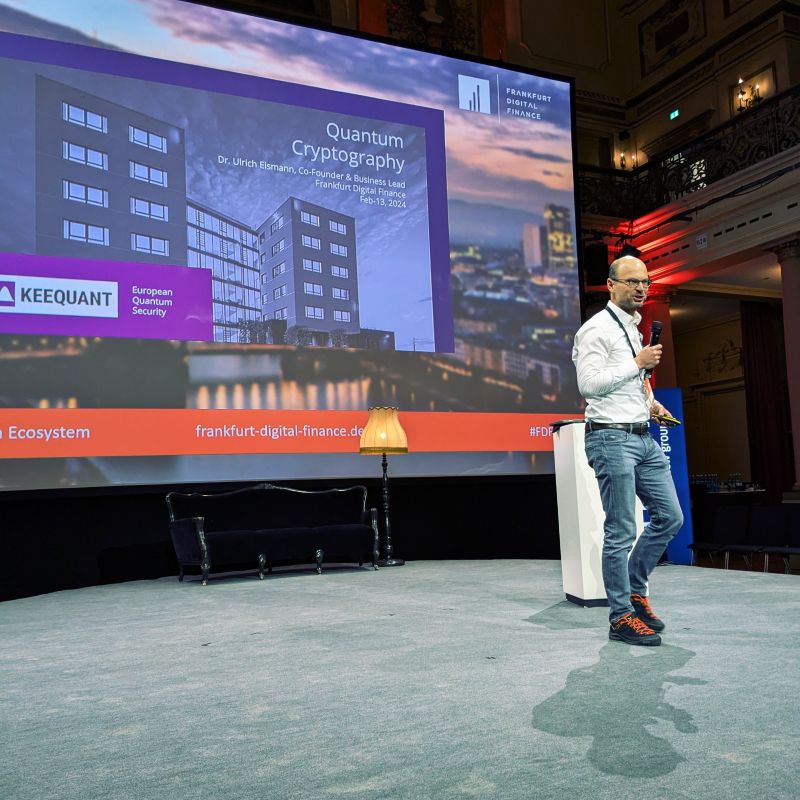
We pitched Quantum Cryptography from KEEQuant at FRANKFURT DIGITAL FINANCE, and to have so many great exchanges about the future of quantum cybersecurity in the financial sector. The discussions around QKD, PQC and Day Q showed that the financial industry is actively preparing for a post-quantum world—great to see and be part of this momentum! Watch the video here.

A big thank you to Verena Zimmermann, CFA for the excellent moderation, the team at TUM Venture Labs, and the organizers for making this possible. Looking forward to continuing these conversations!

2025-09-05T08:12:35+00:00February 13th, 2025|

First QKD link at KIT

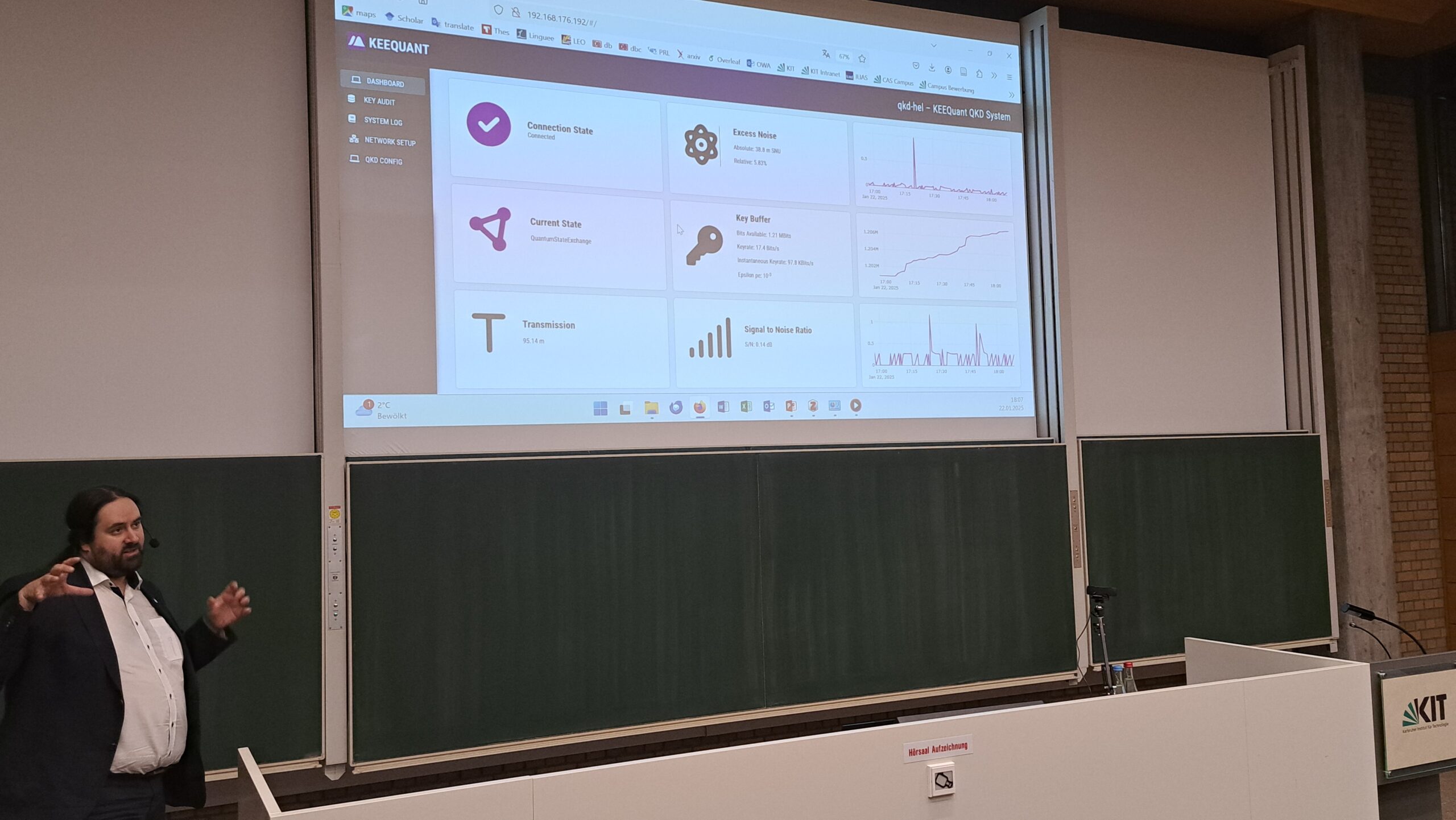
We’re thrilled to share that the Karlsruhe Institute of Technology (KIT) has officially launched a groundbreaking test of quantum key distribution (QKD) for secure communication networks, as highlighted here

At KEEQuant, we’re proud to have provided our Andariel Testbed Series QKD system for the link. A huge thank you to all our partners and supporters who made this possible, including but not limited to Sebastian Randel , David Hunger and Patrick Matalla who made this impressive presentation possible. Your expertise and dedication are key to driving innovation forward!

2025-01-26T11:05:10+00:00January 26th, 2025|

SAT.1 TV Documentation

📺 In case you missed it during the holiday season: KEEQuant recently appeared on SAT.1, showcasing our cutting-edge work in Quantum Key Distribution (QKD) and the future of secure communication! 🔒✨

We’re thrilled to see quantum research gaining more visibility, and we’re grateful for the opportunity to share the spotlight with amazing people like Christoph Marquardt (FAU Erlangen-Nürnberg), Harald Weinfurter (Ludwig-Maximilians-Universität München), and Gerhard Rempe (Max Planck Institute of Quantum Optics), who are all driving innovation in quantum technologies here in Bavaria. 🙌💡

For those interested, you can watch the segment following this link. 🎥

Let’s continue working together to make quantum safe data a reality for everyone. 🚀

2025-01-08T16:26:12+00:00January 8th, 2025|
Go to Top